
This post may contain affiliate links; by clicking on and buying through these links I will earn a small commission, at no extra cost to you: helping me to keep Blind Girl Adventures running.
Accessible skiing, or adaptive skiing, is a specialized approach that makes skiing inclusive for disabled people, including anyone with physical disabilities. The focus is on providing customised equipment and techniques, such as sit-skis, outriggers, and mono-skis, to enable individuals to ski safely. Trained instructors play a crucial role, offering unique guidance and instruction tailored to each person. This accessible approach ensures that people with disabilities can enjoy the thrill of skiing, breaking down barriers and creating an inclusive winter sports environment.
The thought of being on ice and snow when you have a disability terrifies people, especially those who are able-bodied, who could never imagine putting themselves in your position. I’m not going to lie, it’s hard work, it takes a toll on your body and mind, but it’s also the most exhilarating thing you can do, especially if you are taking the plunge and going on a winter holiday.
Let me take you on a blind girl skiing adventure!
I had never skied before let alone tried but I was a pretty confident iceskater, and after realising that I could learn to ski, nowhere other than the French Alps itself, I signed up as soon as I could!
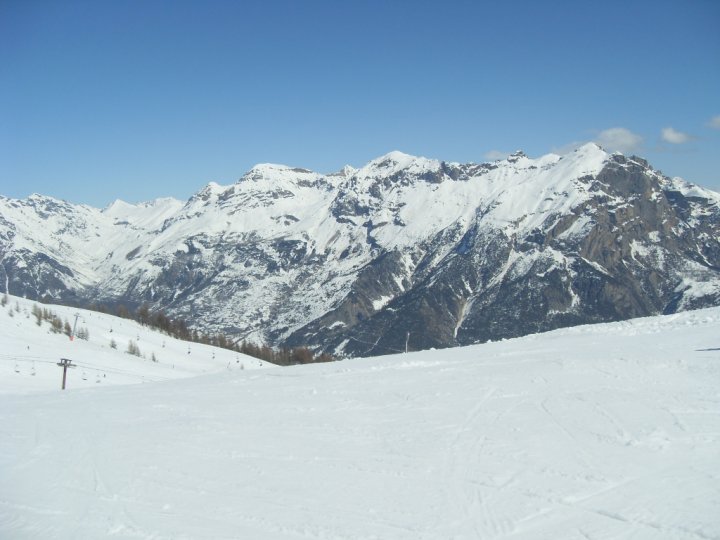
It was 2010, I had been registered blind for three years, and studying my A-levels at the time. We took a coach from Worcester, to Dover, and drove through the scenic valley which looked like something out of a fairytale. As we drove farther into the mountains, the snow became a white sheet upon the view, and all you could see was the Sun gleaming back at you.
If you hadn’t skied before, like me, we were taken to a green ski run. This is a beginners slope with a slight incline allowing you to learn the fundamentals of skiing in a controlled environment.
This is where I learnt how to balance and distribute my weight in my skis, walk uphill, use a button lift, go downhill (known as a straight run) and stop using a technique called snowplough.
The next day I was at the bottom of the mountain by my hotel practising my skills on a larger green slope, and adding parallel turns, sliding edges, and learning how to use a chair lift.
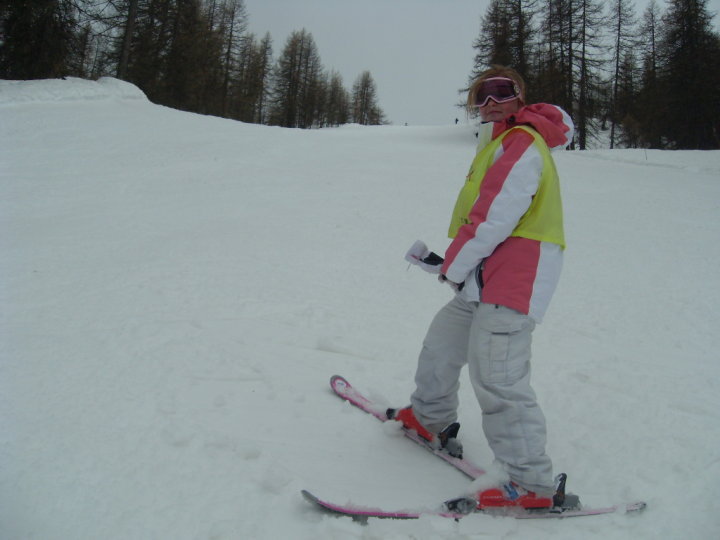
I absolutely adored skiing, and I essentially treated it as an extension of ice skating. Although, a memory that always brings to mind is; my instructor (fellow English teacher) teaching me the tray method. I had ditched my ski poles as I couldn’t use them effectively because of the arthritis in my right hand. I kept thrusting my arms up to the side, coincidentally as I did; my body would follow and so would my skis. Once I got the hang of it though, I spent the rest of the day on green runs. Ending the week on lots of blue runs and a handful of reds, needless to say I was impressed with my abilities as a blind girl with crappy joints, is an understatement.
How do disabled people ski
It all depends on the type of disability you have, for instance wheelchair users who ski use something called a sit ski. Sit ski’s also referred to as monoskis are skis that have a moulded bucket seat suspended above them that the user can sit in. There is a shock absorber below the seat, which makes the ride more comfortable for the user, and the seat is attached to the ski by a sturdy metal frame. Using upper body movements and out rigger skis (gadgets similar to crutches that have a ski attached to the base) attached to the hands, the skier can control the speed and motion of the skis they are travelling on.
Other forms of sit skis involve non-disabled skiers skiing upright and manoeuvring a seated disabled person in front of them as they zoom across the ice and snow.
10 Tips for Accessible Skiing
If you are a first time skier, here are 10 tips to get you started and conquer your fear of skiing for the first time.
Real snow is the way forward
Plenty of people hit the dry slopes (a man-made carpeted slope) it’s great for beginners to practice being on skis or a snowboard, getting used to the weight and movement under your feet. However, nothing truly beats real snow, and there are plenty of UK and worldwide indoor ski slope‘s that have the real thing for you to try out.
Accessible skiing on real snow allows people with disabilities to experience the diverse conditions we are likely to encounter and promotes skill development and adaptability.
The varied terrain on snow slopes helps disabled skiers build confidence and enhances our overall skiing practice.
Skiing or snowboarding?
If you don’t have A preference: skateboarders prefer snowboards and ice-skaters prefer skis, that’s a general rule of thumb, of course it is up to you how you choose to hit the slopes. As someone with very limited ankle and knee movement, I have always gone for skis, they protect your ankles and put very little strain on them when you are traversing the mountains.
Choosing between skiing and snowboarding depends on what feels more comfortable for you and your accessibility requirements. Some disabled people prefer skiing with adaptive equipment for its stability, while others enjoy the manoeuverability of a snowboard. It’s about finding what suits your accessibility needs and preferences.
Protect yourself
It might not look cool to wear a Ski helmet but skiing and snowboarding are adventure sports and you should always take care of your body. Bumps, scrapes and broken bones do happen on the slopes; be careful but still have fun!
Take it easy
Start on the green slopes,: these are for beginners And young children. I would also suggest getting there nice and early because most mountains only have one or two and they fill up pretty quickly. There is definitely a technique to skiing and snowboarding, it will take a lot of practice and it’s okay to rest or go at a very easy pace.
Learning to ski as a blind person with a qualified teacher for the visually impaired, who also knew how to ski: was a massive bonus, not only were they extremely patient but were able to adapt techniques to suit my individual needs as a visually impaired person with arthritis.
Because of this I learned to ski with my instructor audio describing each movement and technique first, and then skiing ahead of me in a luminous orange jacket to allow me to follow them down the slopes.
They built my confidence and gave me fantastic encouragement and feedback which saw me going from strength to strengthin my skiing ability as the week progressed.
Eat, eat, eat!
Eat often, and as much as you can, skiing is a very physical Sport, you use muscles you never knew you had and it’s apprising how many calories you burn speeding up and down the slopes. You definitely build up an appetite, so don’t be afraid to go for that second piece of cake! 😉
Early nights are your new normal
It doesn’t matter whether you are on the slope for 2 days or 2 weeks, the exertion your brain and body is under means that you will be tired and The party animal in you will need to take a back seat. I would also suggest staying off the alcohol, you need to keep your body as hydrated and as rested as possible, and alcohol interferes with that.
Moguls are the enemy
Moguls are A small pile of hard snow, hidden and usually covered up by softer snow, on the mountain. These nasty little blighters will crop up on you when you least expect it, even those who are experienced will get caught and go flying. I hit quite a few on my first ever ski holiday. Going at some speed: I caught one, did a front-flip in the air, my right ski went for a little jolly, and, I landed flat on my back with a soft bump. It was quite funny, I thought I was the new Eddie the Eagle!
You are going to fall over a lot!
Skiing on real snow for the first time is so much fun, but you’ve gotta take the rough with this move, and that means falling over, and being on your arse, a lot! Embrace it, don’t stress and struggle to stay upright, if anything, allow yourself to fall over and take the time to figure out how you are going to get back on your feet with those long heavy sticks attached to them! The first time I fell over, was for such a pitiful reason, I had been on the nursery slopes with my teacher, and we were heading up on the button lift, for the umpteenth time that day.
Because my arthritis was really starting to hurt my feet, I lifted my foot off the ground, and lost my balance. As the button lift isn’t there to hold your weight, in a sitting position, it flipped from underneath me and flew in the air. I had one leg twisted to the left and my other. Was stuck in the air with my ski attached and stuck deep into the ground! The entire button lift was stopped and my teacher had to wrench my foot out of the snow in order to free me! And then instruct me on how to get in a good position to get myself back on my feet. Oh the humiliation!
Getting the hang of controlled falls is a game-changer for accessible skiing. Start by intentionally taking small tumbles to the side, bending your knees as you lower to the snow. Try to land on your side, not your hands or face. If you have enough mobility you can practice the smooth art of rolling out, going from your side back to standing.
3 guesses if you think I managed to master a rollout? Your instruct will show you these techniques, and plenty more to keep you upright as often as possible remember though, it’s not about stopping falling, it’s about going with the flow and doing it safely.
Mountain moods are a thing
A few days of early starts and late nights (what did I tell you about those early nights being essential). You are going to hit a wave of exhaustion like no other; you won’t be able to focus, your limbs won’t be working as you want them to, and you will probably collapse on the snow in a heap, with snotty tears for good measure–Or is that just me?
Unfortunately, the only way is down, so you have two options: ski/bum ski all the way down, or grab the Cable car lift and ride back down to the bottom of the mountain. This happened to me on day four and I had to take the remaining afternoon and following morning off. It’s better to rest and recuperate, than struggle through and make the experience sour for yourself and others.
Here’s some advice that you probably didn’t ask for. Each run, completed or otherwise is a success! You are going hard at a Winter sport that uses every muscle in your body, and never be afraid to stop, and listen to the most sensible one: your brain. As a disabled person I am so used to having to listen to my body, and realise when I have reached my limits. I may have felt ready for the slopes in the morning but neither my brain or body were quite up to the task, resting gave me time to Literally reset and come back more determined the next day.
So if mountain mood takes over, roll with it and use that time to remind yourself of how bloody awesome you are!
Be proud of yourself
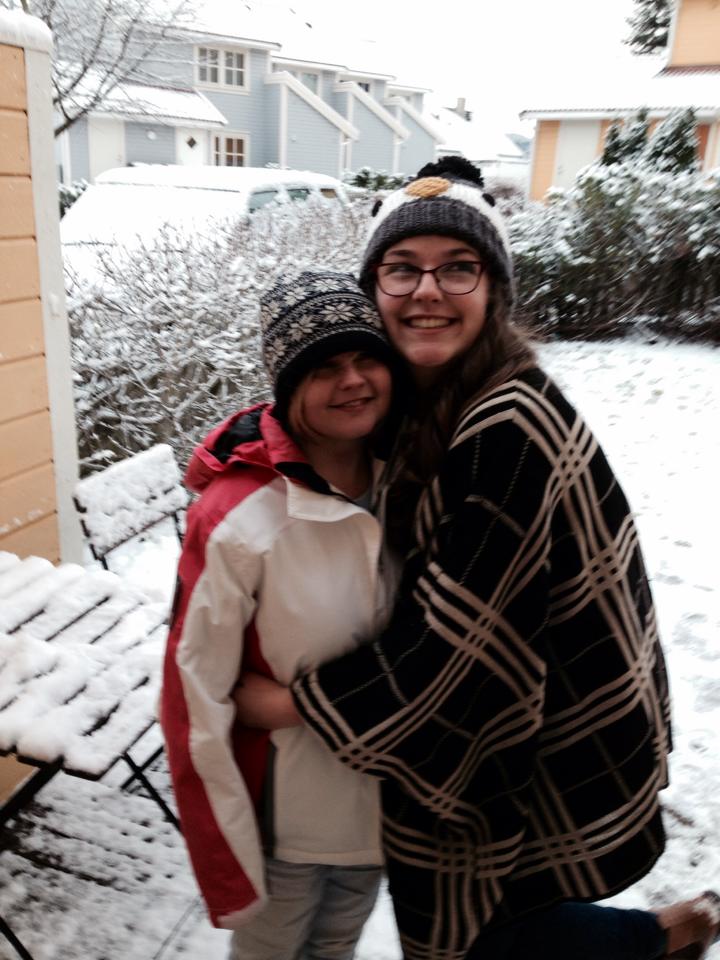
The excitement you feel when you finally manage to stay on your feet / upright on the snow, tackle a slope you never dreamed of, and surviving (and hopefully enjoying your first ski holiday) leaves a happy and wholesome burning in your chest that will make you want to relive the experience all over again. Be proud of yourself that you have taken the leap, and tried something new, and even if it isn’t for you, at least you can say you’ve given it a go! Writing about my ski experience has got me all excited for winter, I might just have to book myself into my local indoor ski slope to get my fix!
Conclusion
Accessible skiing invites you to break barriers; strap on skis and let the mountains become your playground. Whether you are disabled or not, you can rewrite the narrative and feel the rush as you zoom down.
I can’t wait for you to hit those slopes, and redefine what it means to conquer the mountain.
Did you find this post useful? Have you ever been on a winter ski holiday or even just visited an indoor ski slope for the day? What are your experiences? Did you love it? Would you go again? Leave me a comment below, I’d love to hear from you!
For more similar posts, check out my recommendations below:
- Accessible cruising aboard Sky Princess
- Accessible guide to Warner Bros Studios London
- How to Book Airport Assistance for Disabled Passengers
Like it? Pin it!


I’ve never been skiing myself, its something I’ve wanted to do for a while now. Maybe one day I’ll go on a trip, I’ve been ice skating once and I spent all my time on the floor 😂